Knowledge Is Getting Cheap. Being Human Isn't.
AI is compressing human knowledge and running it on millions of machines at once. That changes what work means, not what makes us human. Here's where to look next.

Every month, another problem falls to AI: one that used to take a team weeks, or needed a specialist, or that nobody had cracked at all. Some are million-dollar problems. Some are small, everyday ones. The pattern is the same.
It’s easy to meet this with panic, or with pure excitement. Both skip the question that matters: what should we do with our lives when so much of what we know can be done by a machine?
#Something genuinely new has happened
Every generation thinks it is living through a turning point. This one really is, and it’s worth being precise about why.
We have taken a large part of humanity’s written knowledge (books, papers, code, conversations) and compressed it into models. A compressed copy of knowledge isn’t new in itself: an encyclopaedia is one too. What’s new is that this one can act. And it doesn’t run once. It can run on millions of instances at the same time, each working on a different piece of a problem, without getting tired.
For all of history, knowledge was scarce because it lived inside people, and people are few, slow and mortal. When knowledge becomes cheap and parallel, the value of simply knowing things drops. That is a huge shift for a species that has organised its schools, its jobs and much of its self-worth around knowing things.
#Normalising AI: neither worship nor fear
The first thing we need is a calmer relationship with the technology. Electricity was once a miracle and a terror. Now it’s just there, powering things, and nobody builds their identity around fearing it or worshipping it.
AI is likely to go the same way. The sooner we treat it as a tool, a very powerful one, the sooner we can stop asking “will it replace me?” and start asking a better question: what do we want to spend our one life on, now that we have this tool?
The adaptation will take time, and it will hurt some people far more than others. Pretending otherwise isn’t kind. But it isn’t the end of the story either. AI has collapsed before, and what survived each time was the part that actually worked. That story is told in The AI Winters Weren’t a Failure. They Were a Training Run.
#Purpose isn’t a search problem
In machine learning, almost everything is a search: the best parameters, the best answer, the lowest loss. AI is extraordinarily good at search.
But finding a goal in life is not a search. You don’t find meaning by optimising over every possible life. You find it by feeling something: curiosity, care, the quiet satisfaction of doing a thing well. That feeling made us human long before we wrote anything down, and no amount of compressed text contains it.
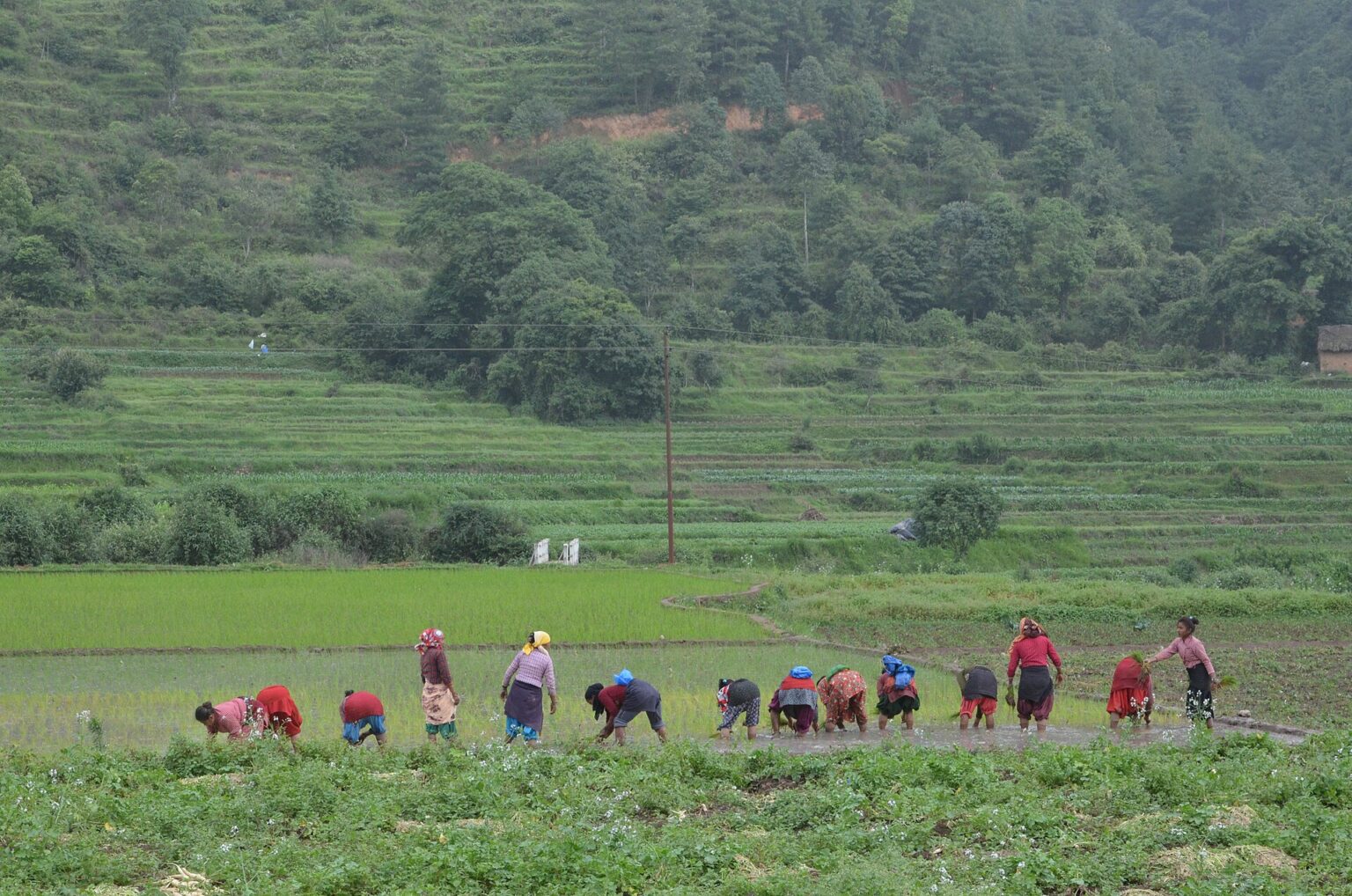
The goal doesn’t have to be grand. It can be growing crops and getting your hands in the soil. It can be carpentry, cooking, teaching children, looking after the old. It can be poetry or painting, things nobody will ever call “productive”. For a long time we ranked these below “knowledge work”. That ranking may be about to turn upside down.

#What the compressed version will never have
Walk past a coffee shop in the morning and the smell reaches you before you decide to notice it. Step outside after the first rain on dry ground and there’s that smell of wet earth. It even has a name, petrichor, coined by two Australian scientists in a 1964 paper in Nature. Walk into a forest and you can smell the wood, the leaves, the damp.
A model can describe all of this beautifully. It has read thousands of descriptions. But it has never smelled anything. It has the map, not the territory.
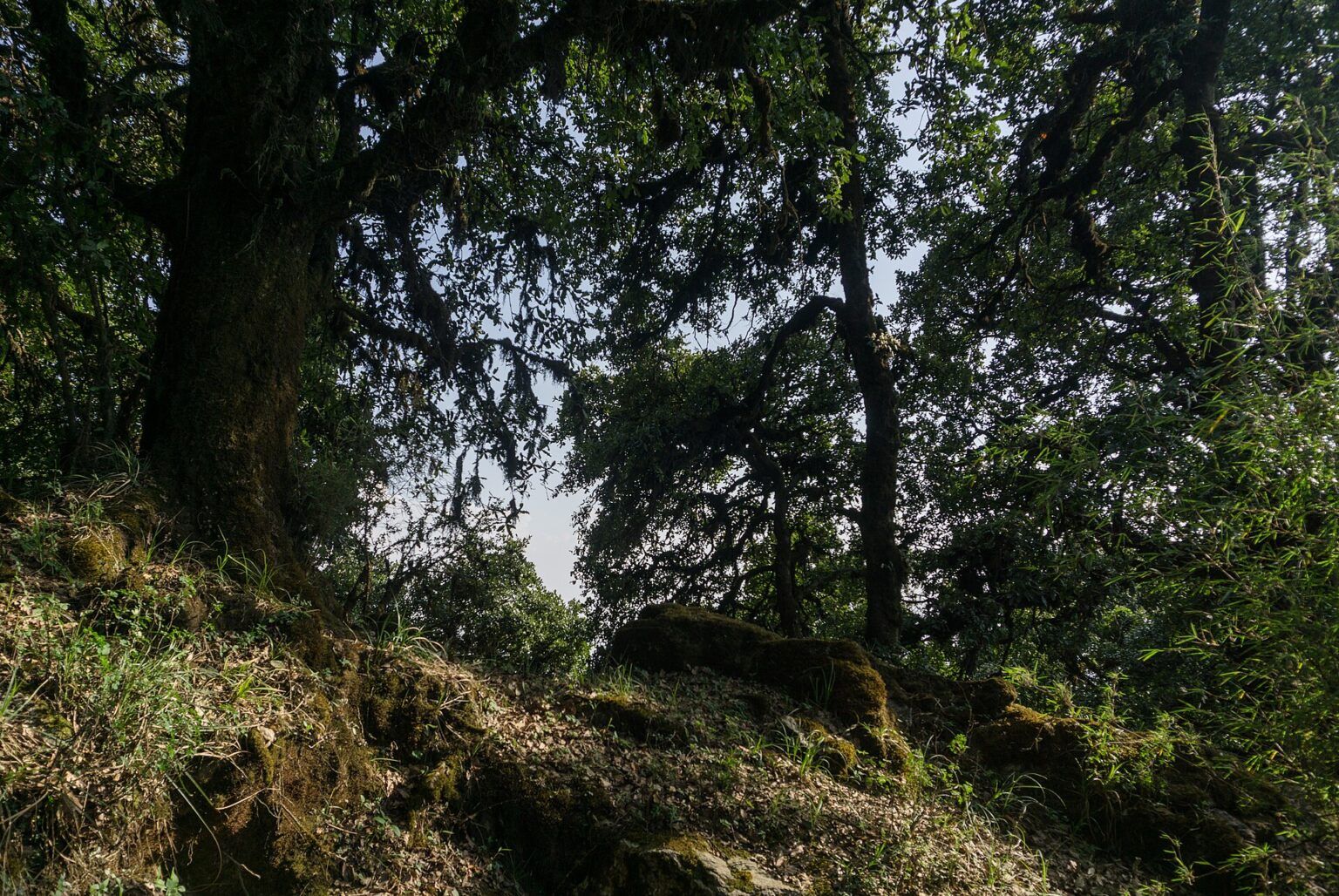

We are built in a very unusual way. We are self-aware, we feel, and we live in bodies that are part of nature. And we haven’t explored ourselves properly yet: the science of the mind still has far more open questions than answers. All the knowledge we have compressed into machines came from us, so in a real sense it will always be smaller than us. A summary is never bigger than the thing it summarises.
#This generation has it harder
None of this is easy. Our generation, and the ones just after us, will face a tougher situation than our parents and grandparents did. They faced scarcity of food, money and opportunity, and that was hard in ways we shouldn’t forget. We are facing a different scarcity: a scarcity of obvious purpose. When a machine can do the task, the question “why am I here?” gets louder.
So we will have to fight, deliberately, for things that used to come for free:
- The will to grow. When the easy path is to let the machine do it, choosing to learn, struggle and improve becomes an act of will.
- Kindness, helpfulness and hope. These were never side features of humanity. They are humanity. In an age of efficient machines, they are what we have to protect and practise on purpose.
#Engineering our thoughts
It helps to treat this as a design problem. The environment has changed, so our thinking has to change with it.
Studying books and concepts won’t be enough to live well any more, because the books and concepts are now available to everyone, instantly. What becomes valuable is everything around the knowledge:
- Asking the right questions: knowing which problem is worth solving at all.
- Judgement and taste: deciding what is good, true and worth doing.
- Responsibility: being the person who stands behind a decision.
- Work with your hands and your presence: farming, building, caring, performing. Things that happen in the physical world, with other people.
- Relationships: trust is built slowly, between people, and can’t be downloaded.
Some of us will also need to move fields. That’s frightening, but people have done it before, at enormous scale. In 1900, 41 percent of the American workforce worked in agriculture. By 2000 it was 1.9 percent, according to the US Department of Agriculture. That change was painful for millions of families, and it took generations. But people found new work, and new reasons to get up in the morning. We will have to do it again, faster.
#We will build an easier life
Now the hopeful part. If we get this right, AI takes on more of the drudgery: the repetitive work, the endless searching, the paperwork. That gives back the one thing humans have always been short of, which is time. Time to grow food, make art, raise children, sit with friends, walk in the forest after rain.


John Maynard Keynes saw this coming almost a century ago. In 1930 he predicted that once technology solved our economic problems, we would face a harder question:
for the first time since his creation man will be faced with his real, his permanent problem—how to use his freedom from pressing economic cares, how to occupy the leisure, which science and compound interest will have won for him, to live wisely and agreeably and well.
John Maynard Keynes, Economic Possibilities for our Grandchildren (1930)
That is our question now. The machines will compress our knowledge. They won’t compress our lives. That part is still ours to live.
#Where to start
Nobody has this figured out yet. But a few habits point in the right direction:
- Use AI fully for what it’s good at, and don’t let it decide what you care about.
- Keep one thing in your life that is slow, physical and yours, however small.
- Practise kindness on purpose, especially when it’s inefficient.
- Treat your curiosity as a signal worth following, not a distraction from “real work”.
- Go outside. Smell the rain.
#Further reading
- Economic Possibilities for our Grandchildren, John Maynard Keynes (1930). Short, and startlingly relevant.
- The 20th Century Transformation of U.S. Agriculture and Farm Policy, USDA Economic Research Service (2005). What a whole workforce changing fields looks like in numbers.
- The smell of rain: how our scientists invented a new word, CSIRO. The story behind petrichor.
- The AI Winters Weren’t a Failure. They Were a Training Run. On what survives when AI hype collapses.
#Image credits
Photos are credited in their captions.